
The "clean beauty" movement promised a revolution. It promised an end to toxic chemicals, endocrine disruptors, and harsh synthetics. You swapped your drugstore staples for glass bottles with minimalist labels. You looked for terms like "paraben-free" and "sulfate-free."
But your skin isn't getting the memo.
Maybe you’re seeing persistent whiteheads. Perhaps your skin feels congested, dull, or strangely oily despite "clean" hydration. The truth is simple: a label that says "clean" does not mean a product is compatible with your biology.
Marketing terms are unregulated. Your pores, however, are governed by the strict laws of biology. Many clean skincare products are packed with hidden comedogens, synthetic fillers, and plant-based oils that your skin simply cannot process.
Your skin is a biological gatekeeper. It doesn’t read the marketing copy. It only recognizes molecules.
The Illusion of 'Clean'
In the beauty industry, "clean" is a lifestyle term, not a scientific one. Because the FDA doesn't strictly define it, brands are free to use the label while filling their formulas with ingredients that cause "subclinical congestion", clogs that haven't turned into full-blown cystic acne yet, but keep your skin from ever looking truly clear.
The problem often lies in what brands use to replace the "dirty" ingredients. To achieve the creamy texture consumers expect, many clean brands turn to synthetic emulsifiers. These are the "glues" that keep oil and water from separating.
Ingredients like Ethylhexyl Palmitate or certain Stearates are often plant-derived, allowing them to fit under the "clean" umbrella. But to your skin? They are heavy, sticky molecules that sit inside the pore, trapping dead skin cells and bacteria.
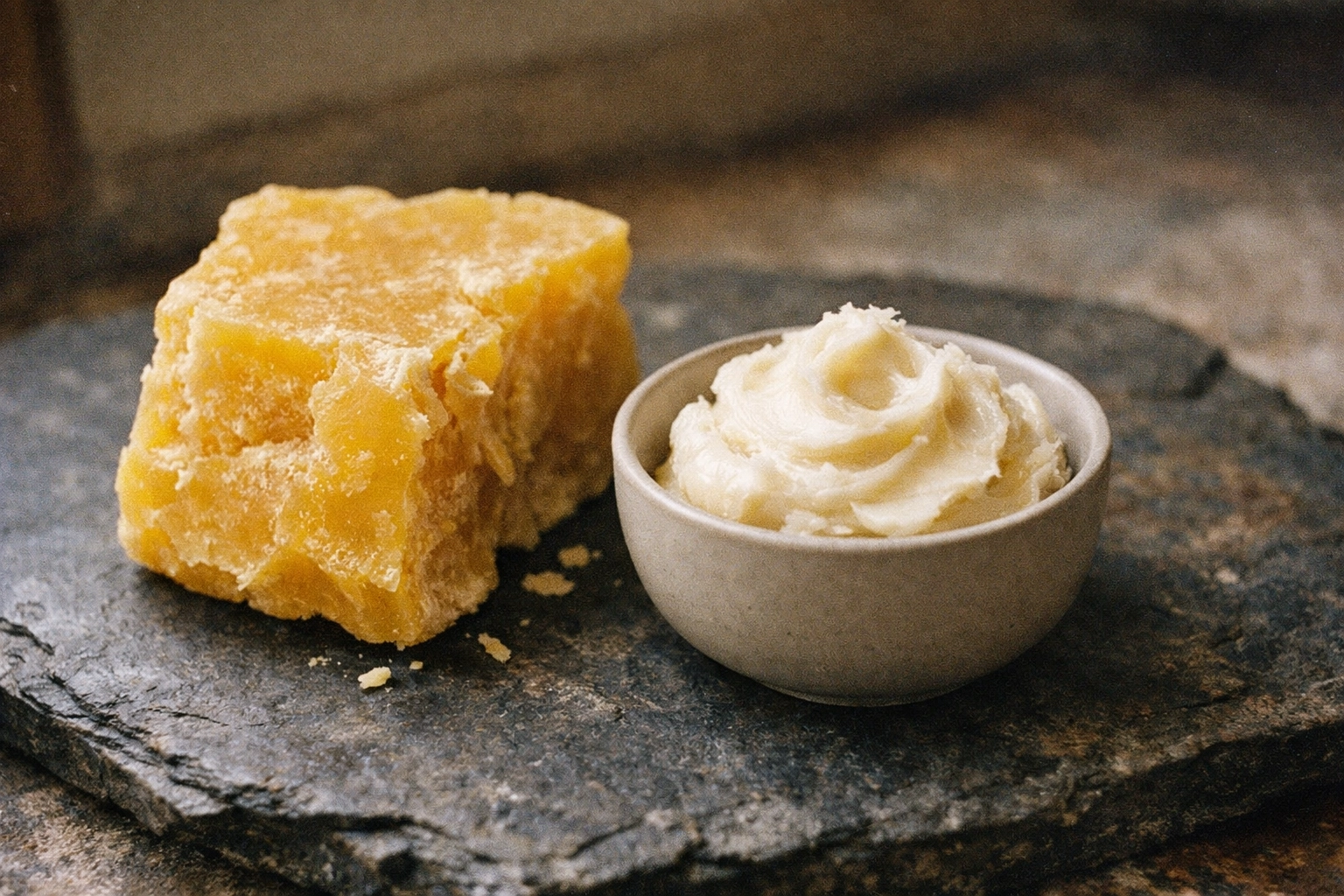
Description: A close-up, authentic shot of raw, natural ingredients on a stone surface, emphasizing texture and purity over clinical perfection.
The Emulsifier Trap
Most skincare is a mixture of oil and water. They don't want to mix. To force them together, chemists use emulsifiers.
In traditional beauty, these were often harsh PEGs. In "clean" beauty, they are often wax-based or fatty acid derivatives. While technically non-toxic to your internal organs, many are highly comedogenic. They create a film over the skin that disrupts the natural shedding of dead cells.
When your skin can't breathe, it clogs.
Then there is the issue of "hidden" fragrances. Even "natural" fragrances derived from essential oils contain volatile compounds like limonene or linalool. These can trigger low-level inflammation. Inflammation causes the pore wall to swell. When the pore wall swells, the sebum (your natural oil) can’t escape.
The result? Congestion.
Biocompatibility vs. Marketing
The modern skincare industry is obsessed with complexity. Lab-grown extracts. Rare botanical seeds. Synthetic stabilizers.
Your skin doesn't need a lab. It needs recognition.
Your skin produces sebum. This is your natural moisturizing factor. Sebum is composed of specific lipids that protect the moisture barrier and keep the skin supple. When you apply a product that is "biocompatible," your skin recognizes the molecular structure and absorbs it. When you apply a product filled with foreign synthetics or high-PUFA (polyunsaturated fatty acid) plant oils, your skin treats it as a barrier to be managed, not food to be utilized.
Most clean moisturizers rely on seed oils like sunflower, safflower, or almond oil. These are high in linoleic or oleic acids. While "natural," they do not match the lipid profile of human skin. They sit on top. They oxidize. They clog.
Learn more about why biocompatibility matters.
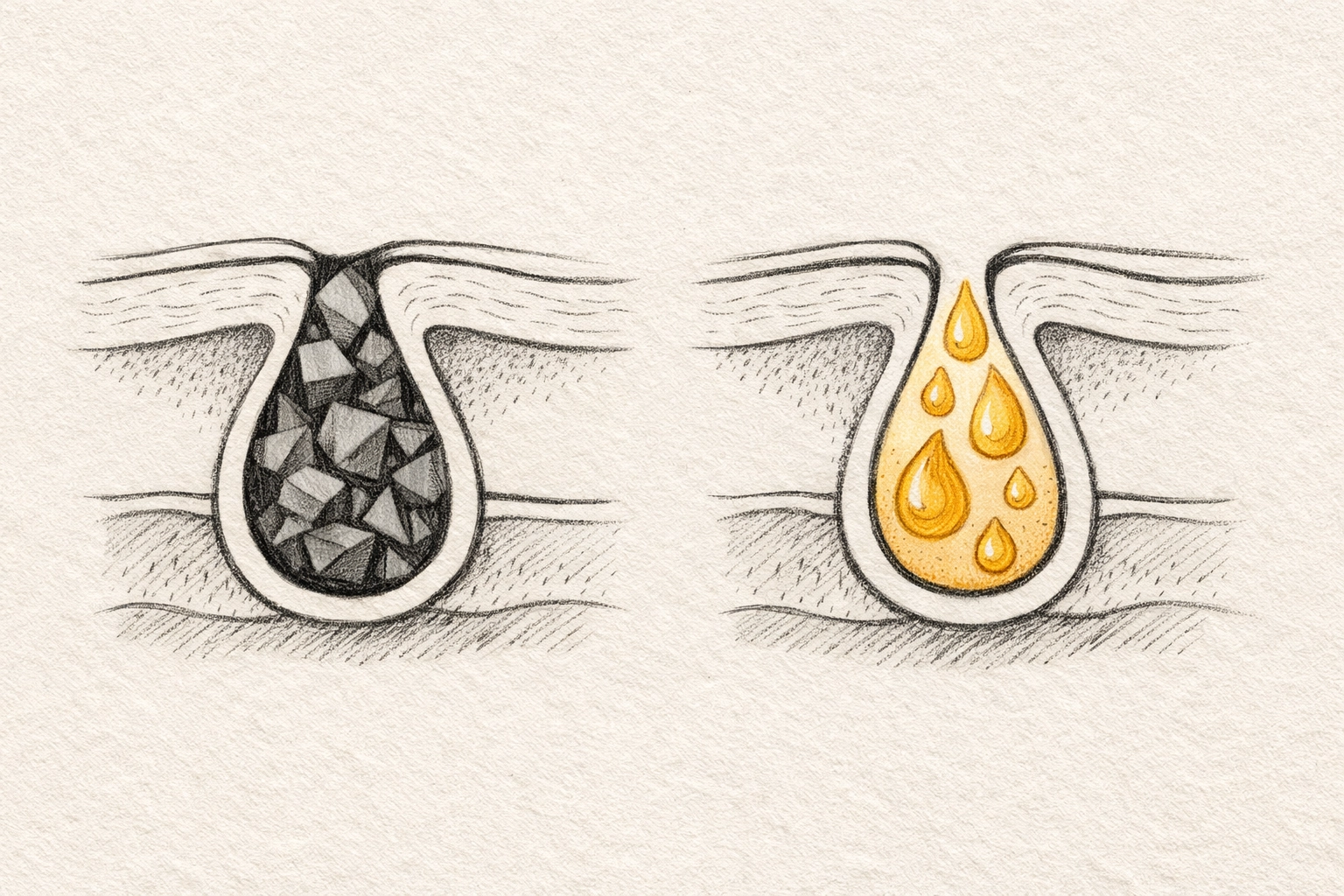
Description: A high-resolution microscopic-style diagram showing the difference between a clogged pore and a clear pore, styled in clean, muted earth tones.
The Science of the Pore: Why Tallow is Different
If you want to stop clogging your pores, you have to stop fighting your biology.
This is where ancestral wisdom meets modern lipid science. Grass-fed tallow is the ultimate non-toxic, non-comedogenic alternative to the complex "clean" formulas filling the shelves today.
Tallow is rendered fat from cattle. Specifically, grass-fed tallow contains a lipid profile that is nearly identical to human sebum. This is called biomimicry.
Because the molecular structure is so similar, your skin recognizes tallow as its own. Instead of sitting on the surface and forming a plug, tallow is absorbed into the deeper layers of the dermis. It delivers nutrients directly to the cells without obstructing the pore.
The Nutrient Profile of True Skin Food:
- Stearic Acid: Helps to repair the skin barrier and improve flexibility.
- Oleic Acid: Acts as a carrier for other nutrients, ensuring deep penetration.
- Conjugated Linoleic Acid (CLA): Provides natural anti-inflammatory properties to calm existing clogs.
- Vitamins A, D, E, and K: Fat-soluble vitamins in their most bioavailable form.
No hormones. No antibiotics. Humanely raised. This is the foundation of our ingredients.
Debunking the "Oil Causes Acne" Myth
The biggest hurdle for many switching to tallow is the fear of oil. We have been conditioned to believe that oil causes breakouts.
This is a half-truth.
Dirty oil causes breakouts. Synthetic oil causes breakouts. Oxidized seed oils cause breakouts.
Your skin needs oil. When you strip your skin with harsh "clean" cleansers, your skin overcompensates by producing more sebum. This reactive oil production is often thinner and more prone to getting stuck in the pore.
By applying a biocompatible lipid like tallow, you send a signal to your sebaceous glands that the skin is sufficiently hydrated. Your natural oil production stabilizes. The "clogging" cycle stops.
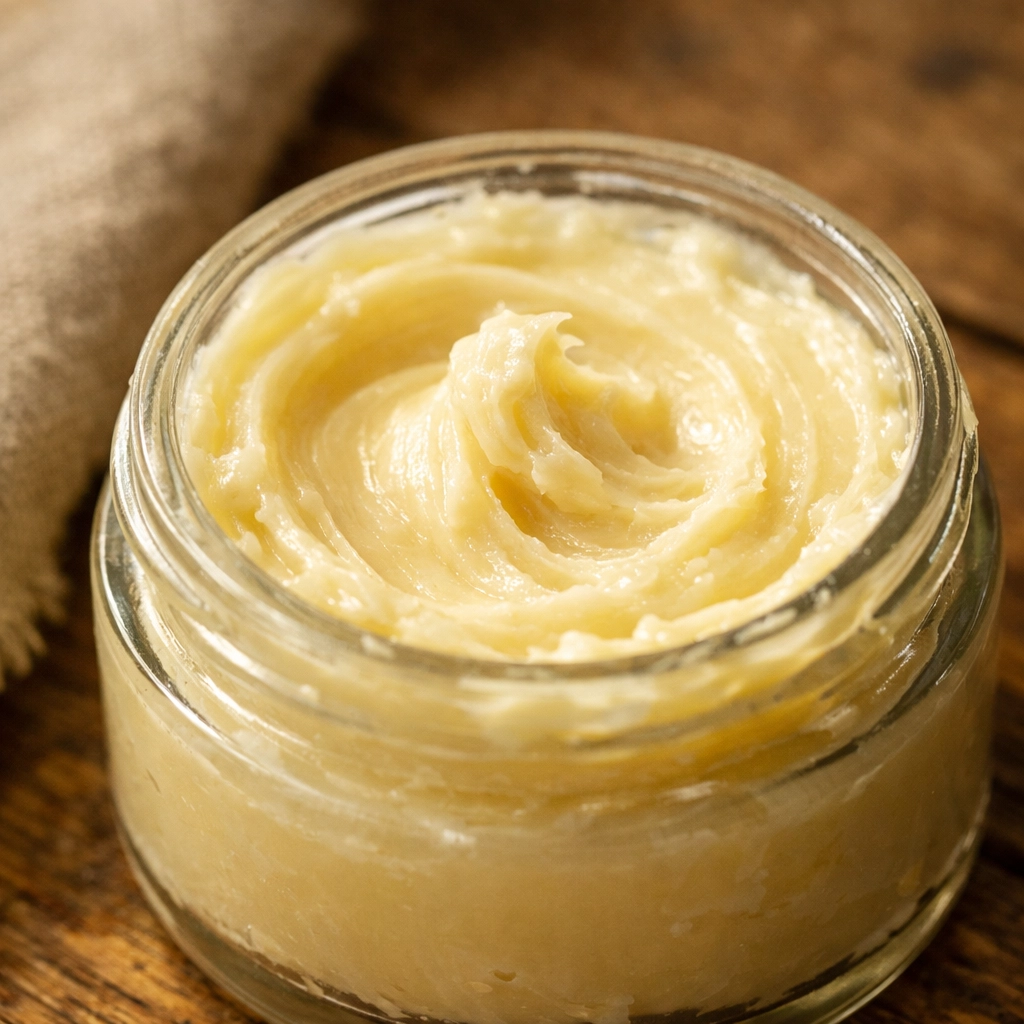
Description: A clean, minimalist photo of a glass jar of tallow balm on a wooden table, with soft morning light hitting the surface.
What We Don't Use (And Why It Matters)
At NECTR, we define ourselves by what we exclude. Most "clean" brands have a "never list" of 10 or 20 ingredients. Our list is much longer.
We don't use:
- Synthetic Emulsifiers: We don't need them because we don't dilute our tallow with water.
- Lab-derived Fragrances: We believe skin should smell like skin, or subtle, whole-plant extracts.
- Seed Oils: We avoid high-PUFA oils that oxidize easily and cause inflammation.
- Preservatives: By eliminating water, we eliminate the need for harsh chemical preservatives like phenoxyethanol.
Our formula is concentrated. It is pure. It is functional.
How to Transition to Biocompatible Skincare
If you’ve been using a 10-step "clean" routine and your pores are struggling, it’s time to simplify. Your skin needs a reset.
- Stop the Scouring: Quit using harsh exfoliants that damage your lipid barrier.
- Audit Your Ingredients: Look for "Ethylhexyl Palmitate" or "Isopropyl Myristate" in your current products. If they are there, toss them.
- Feed Your Skin: Replace your complex moisturizer with a tallow-based balm.
- Wait: It takes about 28 days for your skin cells to turnover. Give your pores time to clear out the old synthetic buildup.
The NECTR Standard
We didn't invent tallow skincare. We are simply returning to what worked for centuries before the industrialization of beauty. We provide the skin with the exact nutrients it needs in a form it can actually use.
No fillers. No "clean" marketing fluff. Just biological reality.
If you are tired of the "clean" breakout cycle, it's time to try something your skin actually recognizes.
NECTR Tallow Balm – $45
Shop the Collection

Description: An aesthetic, lifestyle image of a person with clear, glowing skin, looking healthy and natural, not overly edited.
Frequently Asked Questions
Will tallow make me greasy?
No. Because tallow is biocompatible, it sinks in within minutes. If you feel greasy, you are using too much. A pea-sized amount is enough for your entire face.
Is it safe for acne-prone skin?
Yes. Grass-fed tallow is non-comedogenic. Many users find their acne clears up because tallow balances their natural oil production and reduces inflammation.
How is this different from "clean" moisturizers at the store?
Most store-bought moisturizers are 70-80% water. They require emulsifiers and preservatives to stay shelf-stable. NECTR is waterless and 100% active ingredients.
For more answers, visit our FAQ page or contact us directly.
The path to clear pores isn't found in a new synthetic molecule. It’s found in the wisdom of our ancestors. Stop clogging. Start feeding.


