
For decades, we’ve been told a lie. We were told that "oil-free" is the gold standard for healthy skin. We were taught to fear fat. We stripped our faces with harsh foaming cleansers and synthetic alcohols, chasing a "squeaky clean" feeling that actually signaled a broken skin barrier.
Now, we are seeing the consequences. Chronic dryness. Adult acne. Hypersensitivity.
The truth is simple: your skin is an organ made of lipids. It needs fat to function. But not just any fat. It needs biocompatible fat. This is where tallow enters the conversation, and for some, the fear begins. The word "tallow" brings to mind heavy, greasy textures. People ask: "Will it clog my pores?" "Will I break out?"
The answer is no. In fact, for many, tallow is the missing link to clearing acne for good.
The Science of Biocompatibility
Your skin produces sebum. This is your body’s natural built-in moisturizer. Sebum isn’t just "oil"; it’s a complex matrix of triglycerides, wax esters, and squalene. When your skin is healthy, sebum keeps the barrier intact, fends off bacteria, and locks in moisture.
Beef tallow is unique because its molecular structure is strikingly similar to human sebum. This is why we call it skin food. It isn't a foreign substance sitting on top of your face. Your skin recognizes it.
Tallow is roughly 50% saturated fat, just like our cell membranes. It contains the same lipids found in healthy human skin. Because of this biological match, tallow is absorbed deeply into the dermis. It doesn't just sit in the pore; it integrates with the lipid barrier. It nourishes instead of suffocating.
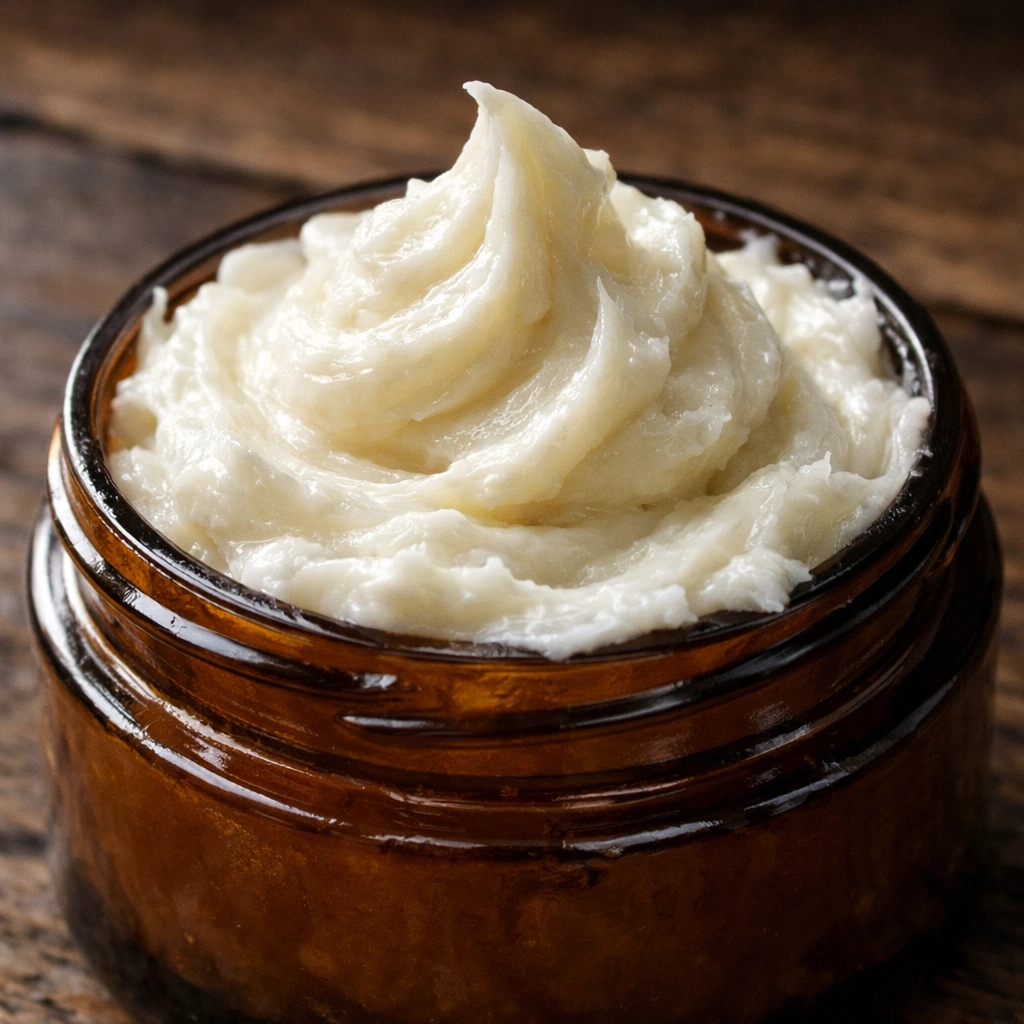
Caption: The raw, creamy texture of NECTR tallow balm: dense, nutrient-rich, and ready to be absorbed.
Understanding the Comedogenic Scale
To understand if a substance clogs pores, we look at the comedogenic scale. This scale ranks ingredients from 0 to 5.
- 0: Won't clog pores.
- 2: Low chance of clogging.
- 5: High probability of clogging.
Tallow has a comedogenic rating of 2.
For context, many "luxury" oils used in expensive department store creams: like coconut oil: rank at a 4. Tallow sits in the "Goldilocks" zone. It is rich enough to provide deep hydration but light enough to allow the skin to breathe. For the vast majority of people, a rating of 2 means no congestion and no breakouts.
At NECTR, we believe in radical transparency. You can read more about our specific sourcing on our ingredients page.
Why Tallow Actually Fights Acne
The irony of the "oil-free" movement is that many acne cases are caused by a lack of high-quality fats. When you strip your skin, it panics. It overproduces low-quality, "sticky" sebum to compensate for the dryness. This sticky sebum gets trapped, bacteria move in, and a blemish is born.
By applying tallow, you signal to your skin that it is hydrated. The "overproduction" cycle stops. Furthermore, grass-fed tallow is packed with anti-inflammatory and antimicrobial properties:
- Natural Vitamin A (Retinol): Tallow is a potent source of fat-soluble Vitamin A. This encourages cell turnover and prevents dead skin cells from clogging pores in the first place.
- Conjugated Linoleic Acid (CLA): Found in high concentrations in grass-fed animals, CLA has powerful anti-inflammatory effects. It calms the redness associated with cystic acne.
- Palmitoleic Acid: An antimicrobial lipid that is a natural building block of our skin. It helps the skin fight off the bacteria that lead to breakouts.
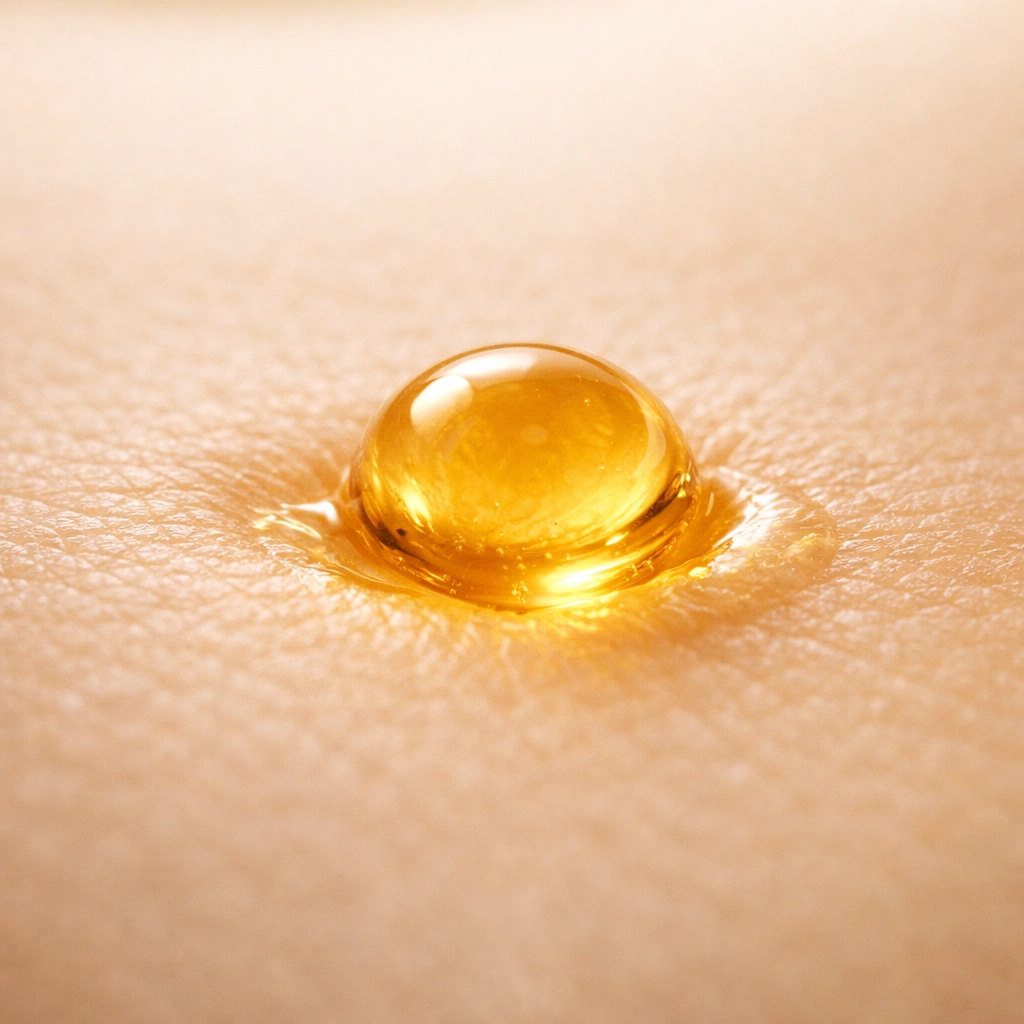
Caption: A microscopic look at the lipid structure: tallow mimics the skin’s natural barrier for seamless integration.
The Difference Between "Pure" and "Processed"
Not all tallow is created equal. This is where most people get into trouble.
If you buy a cheap, mass-produced "tallow" product from a brand that uses grain-fed cows or chemical bleaching processes, you are putting toxins on your face. Toxins are stored in fat. If the animal lived an inflammatory life, its fat is inflammatory.
This is why we focus on ancestral wisdom. We use only 100% grass-fed, grass-finished tallow. No hormones. No antibiotics. Humanely raised. This ensures the fatty acid profile is optimized for healing, not clogging. You can learn more about our philosophy at nectrskin.com/why-tallow.
How to Apply (The "Less is More" Rule)
If you use tallow like a standard water-based lotion, you will feel greasy. Modern lotions are 70-80% water. Tallow is 100% active nutrients. There is no filler.
To keep your pores clear and your skin glowing, follow this protocol:
- Damp Skin: Always apply to slightly damp skin. This helps lock in hydration and allows the balm to spread evenly.
- The Pea-Sized Amount: You only need a tiny amount. For your entire face, a pea-sized drop is usually enough.
- Warm It Up: Rub the balm between your palms to melt it into an oil.
- Press, Don't Rub: Press the oil into your skin.
If your face feels "heavy" after 10 minutes, you used too much. Blot the excess and use less tomorrow.
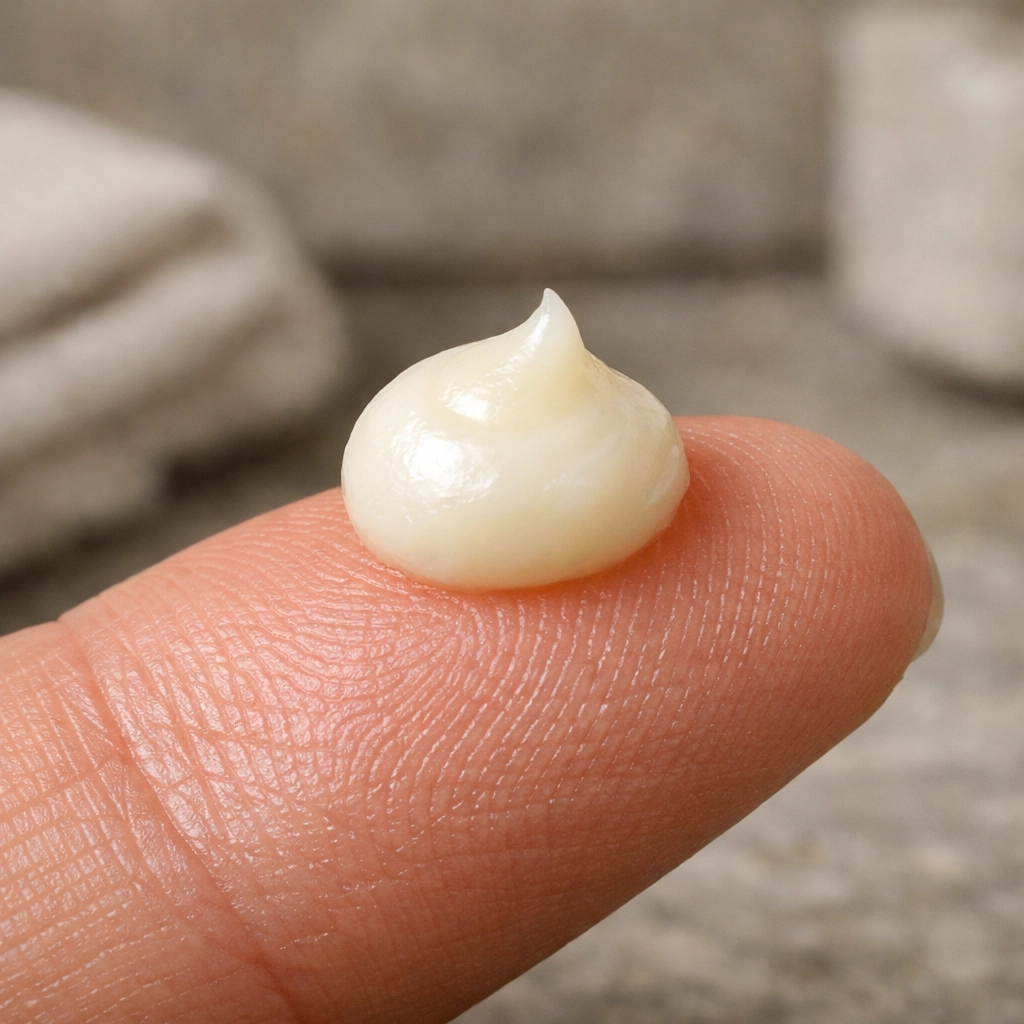
Caption: A visual guide to the perfect amount: start small, let the nutrients do the work.
What We Don't Use
The beauty industry is obsessed with complexity. They add emulsifiers, preservatives, and synthetic fragrances to make products shelf-stable for five years. These chemicals are the real culprits behind pore congestion and irritation.
At NECTR, we define ourselves by what we exclude:
- No Petroleum/Mineral Oil: These are occlusives that literally wrap your skin in plastic. They do clog pores.
- No Synthetic Fragrance: The #1 cause of skin sensitivity.
- No Seed Oils: High in unstable PUFAs that can oxidize on the skin and lead to inflammation.
We believe in simplicity. Our balm is a return to what has always worked. It is a biological match for your body.
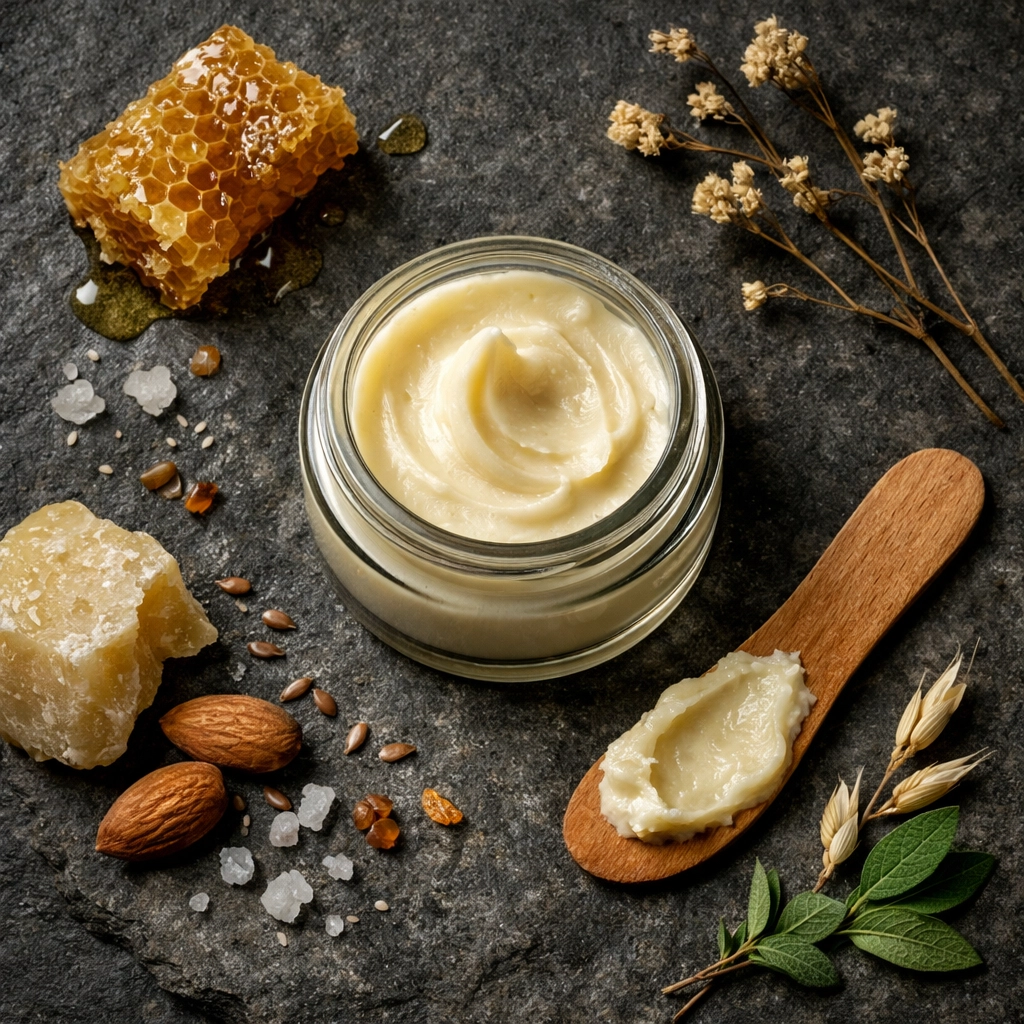
Caption: Transparency in every jar. No fillers, just functional skin food.
Common Myths vs. Biological Facts
Myth: Oil on the skin causes blackheads.
Fact: Oxidized sebum and dead skin cells cause blackheads. The Vitamin E and antioxidants in tallow actually prevent the oxidation of your natural oils.
Myth: You need "oil-free" moisturizer if you have oily skin.
Fact: Oily skin is often dehydrated skin. Providing a biocompatible fat like tallow can actually balance oil production and reduce "shine" over time.
Myth: Tallow is too heavy for the face.
Fact: Tallow is an occlusive and an emollient. It protects the surface while sinking into the deeper layers. It is only "heavy" if you over-apply.
The Transition Period
If you have spent years using synthetic, chemical-heavy products, your skin might go through a transition. This isn't "purging" in the traditional sense, but rather a recalibration. As your skin barrier repairs itself, you may notice changes in texture. Stay consistent. Give your skin 28 days: the length of a full cellular turnover cycle: to recognize the nutrients.
For more information on what to expect, check out our FAQ page.
The Verdict
Is tallow balm bad for your pores? No. It is the most "human" ingredient you can put on your face. It respects your biology. It supports your barrier. It provides the fat-soluble vitamins that modern skincare has forgotten.
If you are struggling with breakouts, stop stripping your skin. Start nourishing it.
Ready to try the NECTR difference?
Our Whipped Tallow Balm is handcrafted in small batches to ensure maximum nutrient density.
Price: $38.00
Shop NECTR Tallow Balm
Questions about your specific skin type? Contact us anytime. We’re here to help you get back to basics.


